Panic attacks at night: can you have a panic attack in your sleep?
Here, we outline why you might get panic attacks and night and how to manage them.


A panic attack at night can feel especially frightening. You might wake suddenly with a racing heart, shortness of breath or a sense of panic, often without understanding why.
Nighttime panic attacks, also known as ‘nocturnal panic attacks’ or ‘night terrors’, happen while you’re asleep and wake you up, often with the same symptoms as daytime panic attacks.
While these nocturnal attacks usually only last for a few minutes, it can take a long time for you to calm down enough to go back to sleep after having one.
Here, we explain how panic attacks occur at night and ways you can manage them.
A panic attack at night, sometimes called a nocturnal panic attack, is a sudden episode of intense fear that wakes you from sleep. You may go from being fully asleep to feeling panicked within seconds.
These attacks often include symptoms such as:
Although they feel overwhelming, panic attacks at night are not dangerous, even though the symptoms can feel very real.
Yes, you can have a panic attack in your sleep. These are known as nocturnal panic attacks and can occur without any obvious trigger. They often wake you suddenly, leaving you feeling frightened and disoriented.
Unlike nightmares, where you may not fully wake up, panic attacks at night usually bring you into full awareness, and you’re likely to remember the experience afterwards.
Some people only experience panic attacks at night, while others have them during both the day and night.
Panic attacks at night are different from nightmares or night terrors:
Understanding this difference can help reassure you that what you’re experiencing, while distressing, is a recognised response.
If you wake up having a panic attack, it's not often clear why this has occurred - often there's no explanation.
The brain doesn’t ‘switch off’ during sleep, so any pent-up worries or anxieties can manifest in our unconscious brains, causing a nocturnal panic attack. Also, struggling with daytime panic attacks makes it more likely that you'll experience panic attacks at night.
There are a number of factors that could increase the risk of someone suffering from nighttime panic attacks:
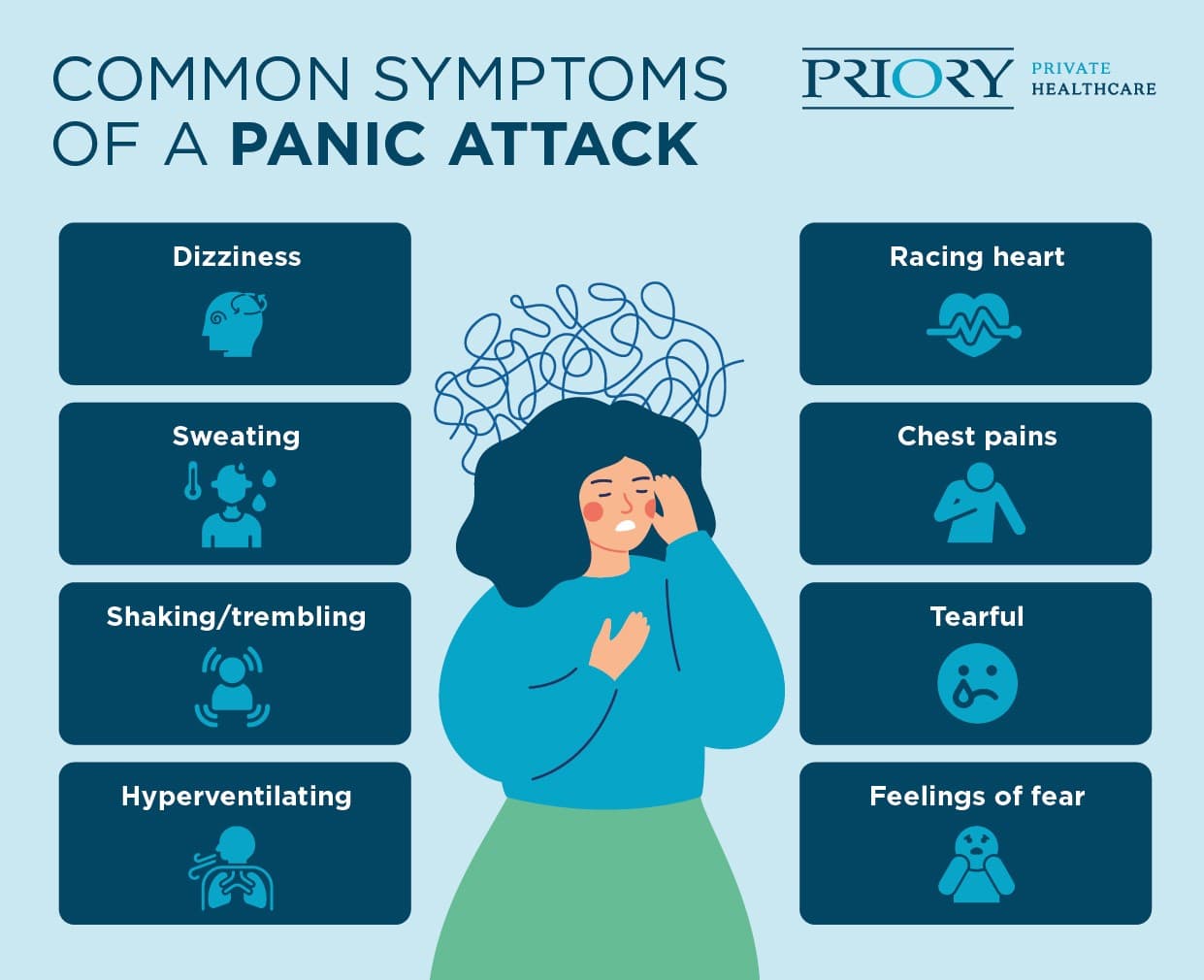
Symptoms of panic attacks at night include:
These symptoms can be so severe they sometimes make first-time sufferers believe they’re having a heart attack or a nervous breakdown.
If you're particularly stressed or anxious, you might also experience what's known as hypnic jerks. These involuntary muscle sensations, like jolts, occur when you're in your lightest stage of sleep.
If you experience a panic attack at night, it can help to focus on calming your body and reminding yourself that the feeling will pass.
If you’re having a nocturnal panic attack, try the following:
Panic attacks at night can be linked to stress, anxiety or underlying mental health conditions, but they don’t always have a clear cause and can happen during sleep without a trigger.
Panic attacks at night can be linked to stress, anxiety or underlying mental health conditions, but they don’t always have a clear cause and can happen during sleep without a trigger.
Panic attacks are not physically dangerous, although they can feel very intense and frightening at the time.